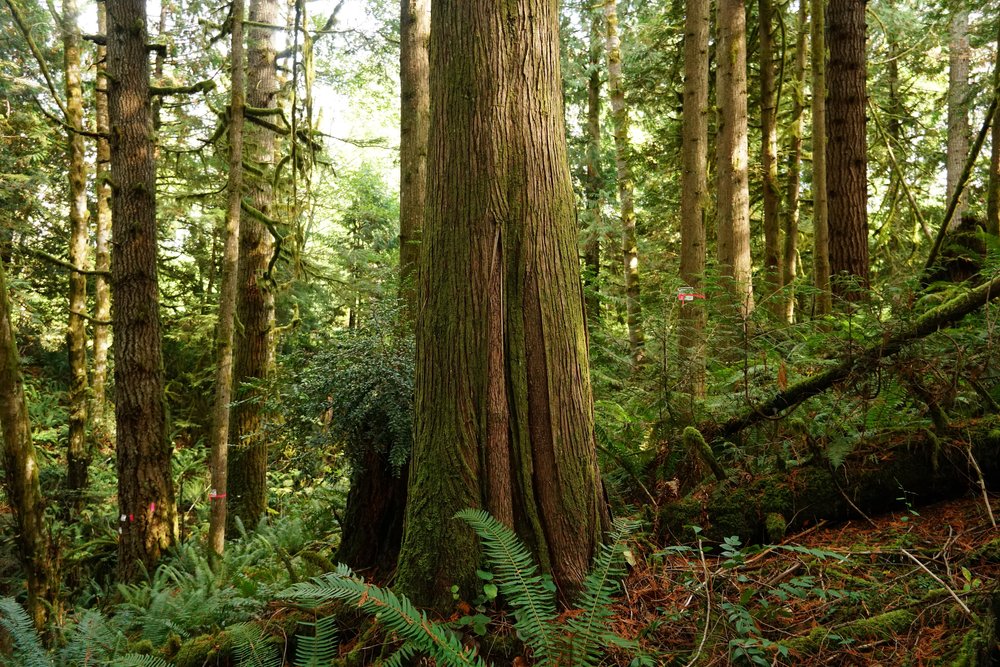


Photo: Forest slated to be logged as part of the Breaking Bud Timber Sale. Credit: Universal Wildlands
One of the biggest challenges of a grassroots campaign that involves submitting public comments to a decision-making agency has to do with quantity vs. quality. In general, it’s much easier to get large numbers of people to submit public comments if you provide them with a pre-written template, meaning they have to do minimal work to submit it. However, personalized, original comments are likely to carry much more weight. Writing a personalized comment shows you’ve taken time to understand the issue and are raising concerns that are uniquely yours, not just pressing “send” to submit someone else’s template. Not everyone has time to write a personalized comment, though, and sending a low-quality template submission is almost certainly better than nothing. The question is, how much better?
I don’t have a definitive answer to this, but an interesting case study in how an agency reacts to personalized versus template comments recently caught my attention. Along with over 200 other Washingtonians, I submitted a comment to the WA Department of Natural Resources about the Breaking Bud Timber Sale, a project that would destroy 100+ year-old trees on the Kitsap Peninsula. I received a link to send a template email from an environmental group I respect. However, I care deeply enough about protecting Washington forests that I wanted to personalize my comment at least somewhat, so I edited the template and injected some of my own thoughts.
A few days ago, I was emailed a letter from the DNR responding to the public comments they had received. The letter essentially states that the timber sale will go ahead, and is rather jarring in its dismissal of the public’s concerns. That aside, though, the way the DNR summarizes the comments it’s responding to is interesting. It lists six comments, one of which is the template email which was sent by over 200 people. Essentially, the DNR considers the submissions of these 200+ individuals to count as one comment, although they do acknowledge the large number of people who signed onto it.
In addition to the above, the DNR responds to detailed comments from the Kitsap County Board of Commissioners, the Kitsap County Environmental Coalition, Washington Conservation Action, and the Legacy Forest Defense Coalition. Interestingly, it appears not one of these was in support of the timber sale, which the DNR decided to move forward with anyway.
There’s one additional comment singled out and listed separately from the others in the DNR’s letter, which is mine. The letter describes my comment as “a modification of the templated auto-generated comment” created by environmental groups. To be quite frank, I can’t remember exactly how much I modified the template comment (I send a lot of these things, and lose track). However, it was apparently enough to make it stand out at least somewhat from the others.
Now, does this mean my comment was hugely more valuable than those of the 200+ people who submitted the unedited template? Probably not. It’s unclear that the DNR considers mine to be much different from those other comments; still, taking time to edit the template did do something. If I had changed the original even more, or simply written a fresh comment from scratch, presumably that would have increased the impact.
It’s often hard to tell what federal and state agencies make of the comments we concerned members of the public send them. However, a takeaway from this experience for me is taking time to personalize your comments at least a little bit does accomplish something, in that it can prevent yours from being lumped in as indistinguishable from hundreds of others. And, the more you personalize it the greater the impact probably is. I know that I, for one, am inspired by this to resolve that next time I submit a comment about a proposed timber sale, I write the whole thing from scratch. I also wonder if environmental groups should make it more of a priority to ensure that at least some of the comments they get members of the public to send are wholly personalized–for example, by hosting in-person or virtual comment-writing workshops designed to produce original submissions.
Should you want to check out the letter from the DNR yourself, you can do so here.
And, for more tips on how to be an effective grassroots advocate, visit this post.
 Nick Engelfried
Leave a comment