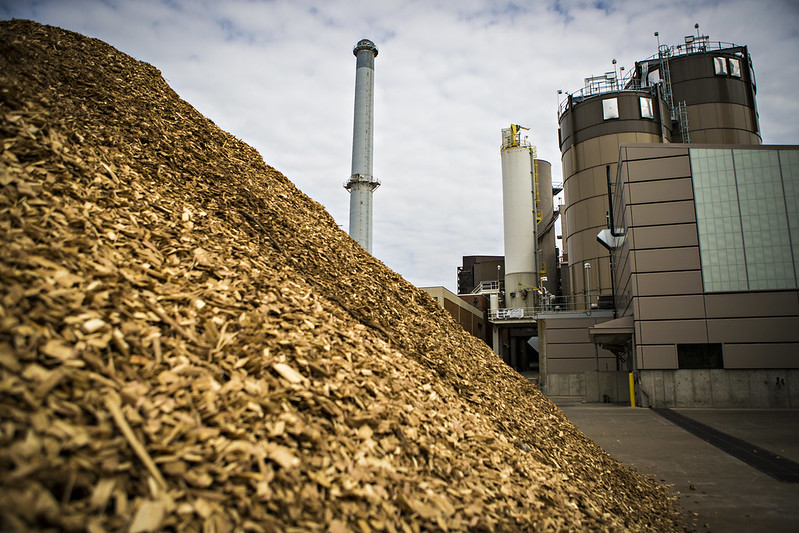


As someone who’s been following international climate politics for years, I’ve long been familiar with UK company Drax, which at one time operated the largest coal plant in Western Europe. Over the last couple decades, Drax has tried to brand itself as a “renewable energy” company while phasing out its use of coal and replacing the fossil fuel with wood pellets. Problem is, it’s not at all clear burning wood biomass for energy is any better for the climate than burning coal.
I was surprised when, a couple of months ago, an email from 350PDX appeared in my inbox that explained Drax Group is seeking to build a massive biomass processing and export plant on the Columbia River in Longview, WA. I immediately knew I had to look more into this. I had never exported communities here in Washington and Oregon to have to fight Drax on our doorstep–but it now appears that’s just what climate groups in our region will have to do. The story of Drax’s biomass proposal, and what it means for Northwest forests and the global climate, is the subject of my first-ever piece for Columbia Insight, published a couple of days ago.
As I dug into research for this story, it quickly became apparent that corporate talking points claiming Drax’s plant will be processing “waste wood” are misleading. While it’s likely some of wood used by the plant will consist of leftover slash from logging operations, Drax’s own annual report makes it clear they expect to be harvesting whole trees to meet demand from their plant. Wood chips from the facility will be exported overseas–likely to markets in Asia. In short, Drax wants to cut down Northwest forests to feed the global market for biomass.
I also quickly realized that Drax’s facility isn’t a done deal. Groups like 350PDX are doing a great spreading the word about the project’s impacts, and there’s going to be an important public hearing on a key permit Drax needs–possibly as soon as this spring. Read the piece in Columbia Insight for more about Drax’s plans, how they affect the Pacific Northwest, and how to get involved.
Photo credit: Kyle Spradley
 Nick Engelfried
Leave a comment