

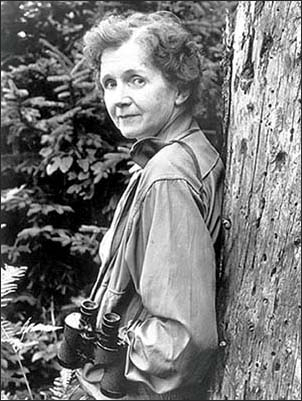
Rachel Carson’s name is legendary in environmental circles–and for good reason. Carson’s 1962 book, Silent Spring, sounded the alarm about the hazardous effects of pesticides such as DDT, and is widely credited with helping spark the modern environmental movement. The book came out at a time when Congress and the White House were far more amenable to translating public concern about pressing issues into federal government policy than they are today–and within a decade, some of the country’s bedrock environmental were enacted. These included the Clean Air Act, Clean Water Act, and National Environmental Policy Act. Eight years after Silent Spring, in 1970, the Nixon administration created the EPA. It’s very possible none of this would have happened without the work of Rachel Carson.
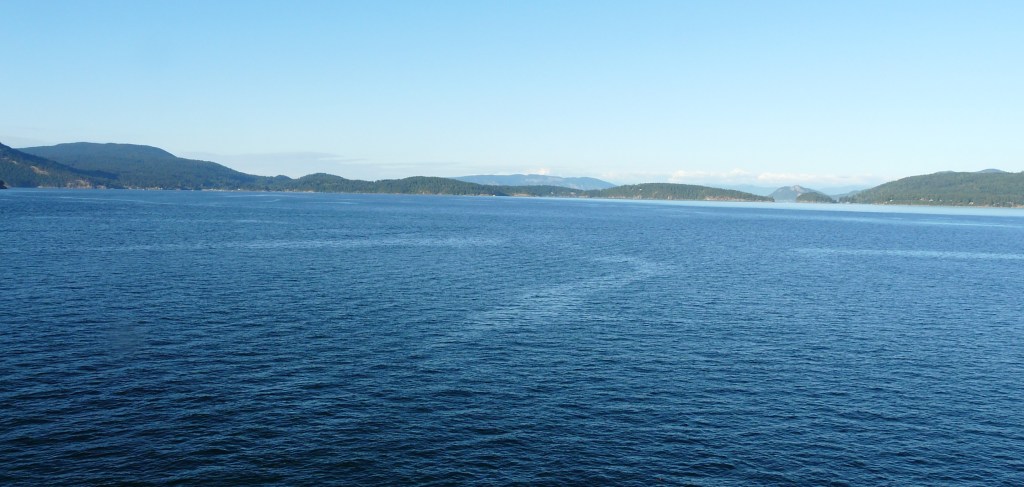
However, as renowned as she is, today we honor Carson mainly because of one book–and she actually deserves to be remembered for much more than that. Carson started her career as a marine biologist before transitioning to a role interpreting scientific information and breaking it down in ways readers without special training could relate to. She was a pioneer in the field of popular science writing. Her 1950 book, The Sea Around Us, distilled what was then known about the workings of the world’s oceans and presented it in a manner infused with poetry spiritual reverence for the natural world–a feat reminiscent of later environmental classics like Barry Lopez’s Arctic Dreams.
Carson was also an early advocate for environmental education who recognized the importance of instilling young people with a sense of wonder about the natural world. Her 1956 essay, “Help Your Child to Wonder,” published in Woman’s Home Companion, should be considered a classic of the environmental education movement. So, why hasn’t she been more widely recognized for her many accomplishments?
One possibility is the publication and runaway success of Silent Spring overshadowed Carson’s other contributions to the fields of environmental and science writing. It’s also true that her early works no longer seem as groundbreaking today as they did when they came out. Some of the scientific findings presented in The Sea Around Us is now out of date, and the book doesn’t seem as unique at a time when we have many others that take similar approaches to distilling information about the natural world. Yet, that shouldn’t keep us from appreciating what Carson wrote. The Sea Around Us, “Help Your Child to Wonder,” and other works are beautifully written, and I highly recommend them to modern readers wishing to enhance their own sense of wonder toward the world we inhabit.
It also seems virtually certain that sexism contributed to some of Carson’s work being overlooked or forgotten. “Teach Your Child to Wonder” was published in a woman’s magazine, likely diminishing the seriousness with which some educators might have taken it. It should be mentioned that during her time as a practicing marine researcher, Carson signed her papers “R. Carson,” so readers would assume she was a man. She worked in fields where male dominance was even more entrenched than it is today, and throughout her life she struggled to make audiences take her meticulously researched work seriously.
So, Carson deserves to be remembered not only as an early popularizer of multiple literary genres, but as a trailblazing woman scientist and author. She also faced another type of prejudice: homophobia. Letters exchanged between Carson and her friend Dorothy Freeman strongly suggest their relationship was more than merely platonic. They appear to have been terrified of being found out–and with good reason, given the laws and attitudes of the time. It’s important to remember that we don’t really know how Carson viewed her own sexual orientation–and she might not have applied labels to herself that our modern understandings of identity suggest would be appropriate. Still, I hope that if she were alive today, Carson would appreciate knowing millions of people sympathize with her struggles and her bravery in sustaining a relationship that could have destroyed her public reputation in the 1950s.
There is so much more that could be said about Rachel Carson’s remarkable legacy. For more about her life and career, see these resources from the National Women’s History Museum and US Fish and Wildlife Service. A short discussion of her correspondence with Dorothy Freeman can be found here. I encourage you to learn more about this amazing person who gave so much to the world.
I’m sharing this post in the spirit of Women’s History Month. For more about naturalists whose contributions have gone under-recognized, see my piece from this blog on the life of Charles Henry Turner.
 Nick Engelfried
Leave a comment