


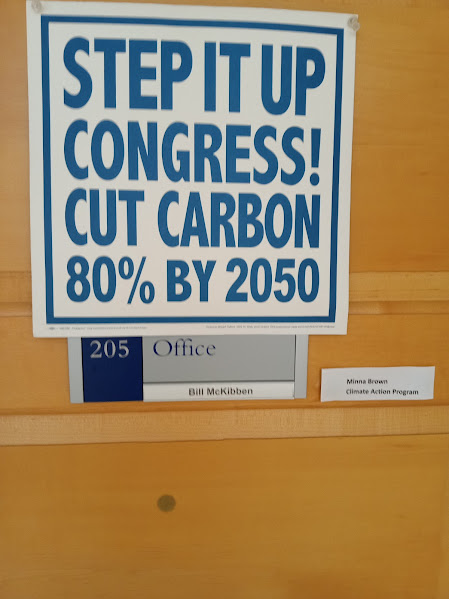
Few places have played a more important role in the generation of the modern climate movement than Vermont’s Middlebury College. It was in 2005 that a group of Middlebury students, many of whom were in a class climate change and social movements taught by Professor Jon Isham, founded what was then known as the Sunday Night Group–a student group dedicated to advancing climate activist projects and campaigns. Some of those students went on to work with Middlebury scholar-in-residence Bill McKibben to launch a series of climate mobilizations that culminated with the creation of 350.org, which has grown into an international grassroots organization responsible for organizing some of the biggest climate mobilizations in history.
Given Middlebury’s unique role in the climate movement, and youth climate activism in particular, I was excited to have the opportunity last week to visit and present at the college as part of the Howard E. Woodin Environmental Studies Colloquium. Over the course of three days I had the chance to meet some of Middlebury’s extraordinary students, staff, and faculty who continue to carry on the college’s legacy of activism today.
A time in the ’00s when the campus-based climate movement was mainly focused on reducing the footprint of higher education institutions, Middlebury students made a point of extending their activism beyond campus to affect the wider political and cultural dialogue about climate change. In 2006, members of the Sunday Night Group worked with Bill McKibben to organize a march across Vermont that represented the largest climate protest in the U.S. up to that time. Next came Step It Up, a national day of action designed to pressure the 2008 presidential candidates to support bold climate action (I organized a modest Step It Up action at Pacific University in Oregon, where I was in college at the time). 350.org built on that foundation by organizing series of international days of climate action, then going on to spearhead campaigns around fossil fuel divestment, the Keystone XL pipeline, and more.

It’s worth posing the question: why has this one small private college in Vermont played such an outsized role in the climate movement? The answer would seem to be complicated. Academia sometimes does a better job preparing students to analyze past movements than participate in current ones–but Middlebury professors have repeatedly taken steps to bring current climate movement developments into the classroom. The college also has a history of bringing together academics and thought leaders for in-person gatherings at Middlebury where they interact with students and faculty.
Not many institutions can claim to be directly linked to the creation of one of the most important climate activist groups in the world. However, that doesn’t mean other colleges and universities can’t follow Middlebury’s example by fostering activism and encouraging students to take action with a firm grounding in social movement theory. Indeed, Middlebury’s example shows just how much impact one higher education institution can have–and today, every college and university has the chance to play a pivotal role in growing the next phase of the climate movement.
 Nick Engelfried
Leave a comment