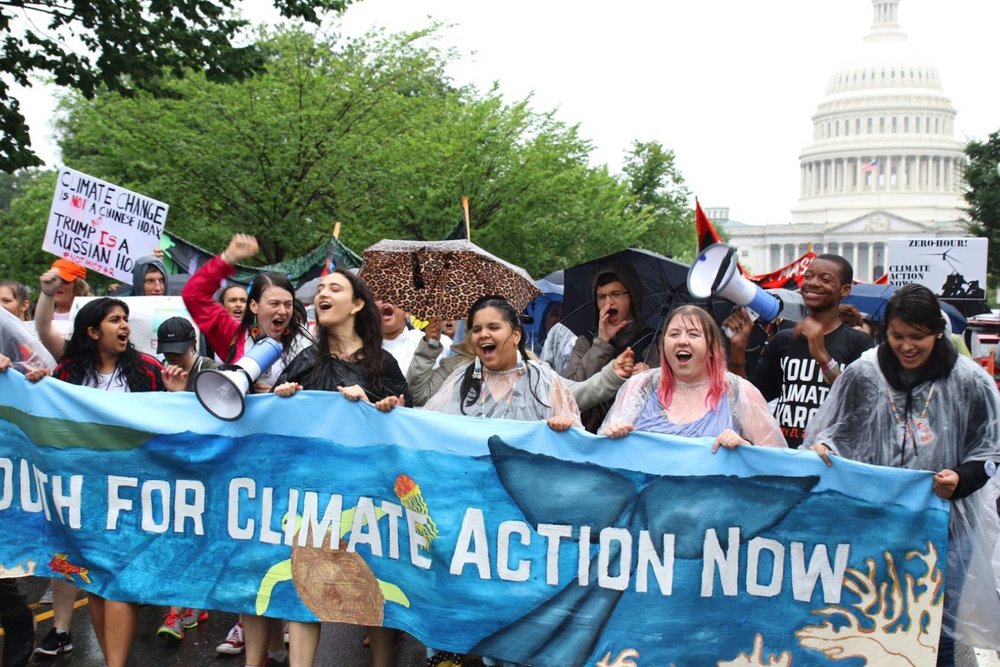


Photo credit: Zero Hour
In January, U.S. climate activists prepared for one of the largest direct action protests against fossil fuels in years. The plan was for people to descend on the Department of Energy headquarters for three days of sit-ins protesting a series of massive liquefied natural gas, or LNG, terminals up for approval on the Gulf Coast. If built, the projects would dramatically increase the amount of fossil natural gas being burned around the world. Hundreds of activists readied themselves to risk arrest.
The sit-in never happened, but not because activists lost their nerve. Rather, just a couple weeks before it was to begin, the Biden administration announced it would delay its review of the LNG projects to look at their climate impacts. The eventual fate of the terminals remains uncertain, in light of court challenges and Biden’s shaky re-election prospects. However, the fact that activists moved the administration without one actual arrest represents a remarkable win.
Successful social movements — especially big, complex ones like the climate movement — are messy affairs. Victories are hard-won, and sometimes the end goal seems unreachable. However, there are patterns movements follow as they expand from the political fringes to start shaping national decisions. One framework for identifying these is the eight-stage “Movement Action Plan,” or MAP, articulated by activist and scholar Bill Moyer in 1987.
 Nick Engelfried
Leave a comment