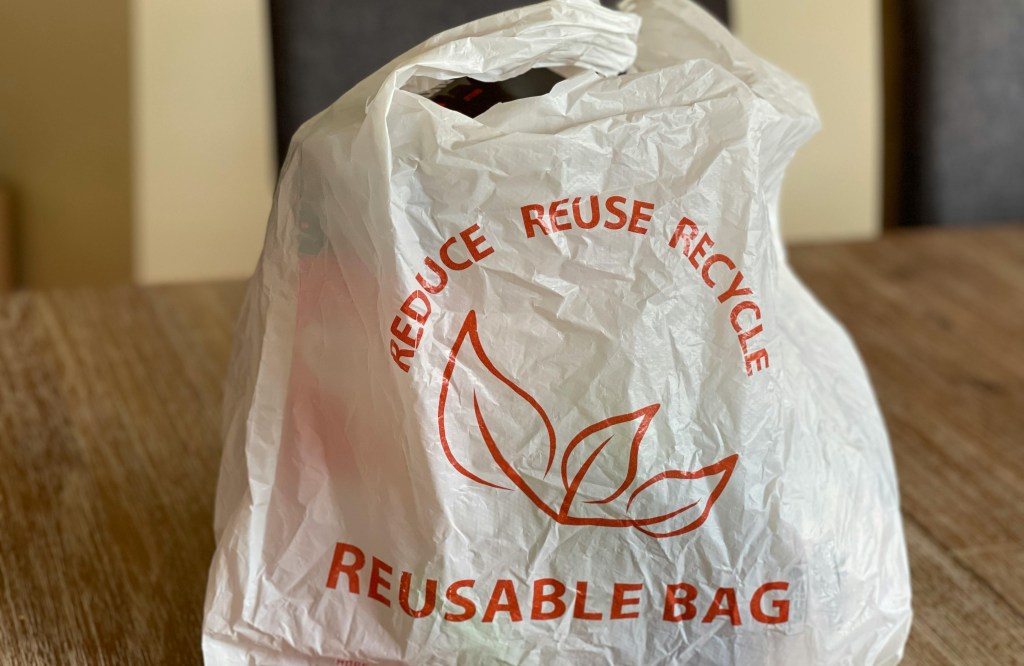


The explosive growth of the plastics industry is a crisis our society is ill-equipped to address. The flood of plastic waste pouring into the global environment threatens the climate, human health, and myriad other species–and yet, there seems to be no end to the tide in sight. It’s essential that we take action to curb the number of plastic items in our lives, especially when it comes to single-use products that will be used once and then thrown away, to persist in the environment for hundreds of years.
Plastic bag bans are a promising strategy for reducing one of the most prevalent sources of plastic pollution–and in the last several years, a growing number of US states and municipalities have passed bag bans of one sort or another. Experience shows that the effectiveness of these bans depends greatly on the details, with some bag policies containing loopholes that have prevented them from accomplishing their intended goals.
That’s what I wrote about in my latest post for Columbia Insight, which focuses on the state plastic bag bans in Oregon and Washington. Both these state laws have failed to stem the tide of plastic pollution to the degree activists and lawmakers hoped they would–but they can be fixed, and policymakers have an opportunity to do so this year. Read more in Columbia Insight.
 Nick Engelfried
Leave a comment