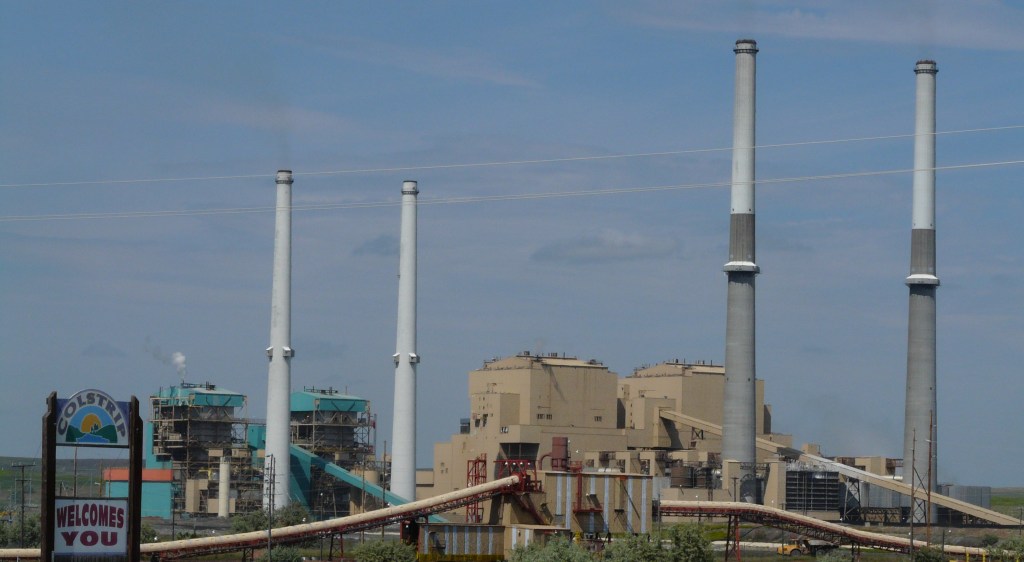


Photo: Montana’s Colstrip power plant in 2015
From about 2009 to 2016, I expended an exorbitant amount of energy in grassroots movements to challenge the coal industry. This was when efforts like the Sierra Club’s Beyond Coal Campaign were getting off the ground–and from retiring existing coal plants, to stopping coal export projects on the West Coast, to defeated proposed new mines in the Powder River Basin, we won one victory after another.
Today, coal’s contribution to the U.S. energy grid is a fraction of what it was at its height over a decade ago. Coal is increasingly being supplanted by cheaper, cleaner forms of energy, but there are some who don’t like this trend. Thus, with a coal-friendly administration in office, we’re seeing a series of increasingly desperate attempts by the federal government to prop up this dying industry. I look at a couple of them in my two most recent pieces for Sierra.
In Montana, the utility that supplies electricity for most of the state is embarking on an expensive plan to keep the two remaining units of the Colstrip power plant open. Montana’s Republican state officials and the Trump administration are doing all they can to support the plan, costs to ratepayers be damned. Read all about it here.
The Trump administration is playing an even more direct role keeping five other coal plants open that were supposed to retire one or more of their units last year–including the Centralia Plant in my current home state of Washington. The Trump Department of Energy has ordered these plants to stay open, even if no one wants their energy. Learn more here.
It’s unclear how viable either of these efforts to postpone coal’s demise can last. Though once seen as “cheap” energy, coal is now more expensive than alternatives in most parts of the country, so the industry’s proponents are up against economic forces as well as social and environmental ones. No doubt we can expect more desperate attempts to keep coal alive in the future–but what’s almost certain is they can only postpone, not prevent the inevitable.
 Nick Engelfried
Leave a comment