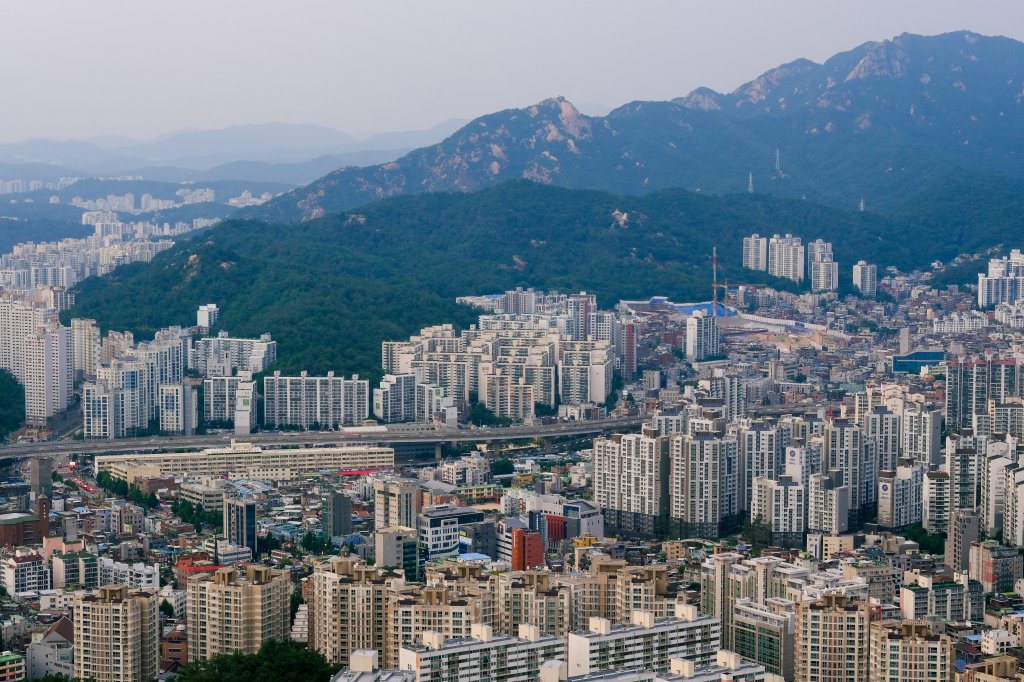


Photo: Seoul, South Korea. Credit: cskkkk/Pixabay
If there’s one thing that’s defined global efforts to limit climate change over the last few decades, it’s the seeming inability of world leaders to treat the problem like the crisis it is. As warnings from climate scientists grow ever more dire, most national governments have responded with plans for a slow, plodding transition to clean energy. That’s not counting the current situation in the US under Trump, where our federal government is actively trying to prevent the energy transition.
So, it was with a jolt of pleasant surprise that I read how South Korean President Lee Jae Myung responded to his own energy minister’s proposal to require selling only electric cars in one of the country’s regions by 2035.
“What do you mean 10 years from now?” President Lee is reported to have said. “That’s too slow.”
Just to be crystal clear: Korea’s president isn’t protesting that a transition to all electric vehicle can’t be done within a decade. He’s saying this timeline — which almost any industrialized country would consider ambitious — isn’t fast enough to meet the perilous moment we’re in.
It’s important to note that the reason Lee cites for needing to accelerate the transition to clean technologies isn’t actually climate change, but energy security. South Korea relies on imports for its fossil fuels, making it incredibly vulnerable to disruptions in the global oil and gas markets. The US-Israel war in Iran has exposed this weakness to a frightening degree, prompting Lee to reportedly call the situation “so serious I can’t fall asleep.” The thing keeping Korea’s president up at night may not be climate change per se — but even so, this is exactly the kind of urgency the world needs to apply to the energy transition.
Even before the current geopolitical energy crisis, South Korea was showing signs of getting serious about growing its clean economy. The historically very coal-dependent country has a goal of generating 30 percent of its electricity from renewables by 2036, and is making big investments in offshore wind and rooftop solar. The government has also introduced strong subsidies for electric vehicles, prompting sales in February to jump 172% compared to the same time last year. Still, up to now Korea’s energy transition has appeared set to follow a trajectory of slow, steady growth — not the rapid transition the world needs to embark on to avoid catastrophic climate damage.
Could President Lee’s recent remarks indicate a real shift in South Korea’s approach to adopting clean technologies? It’s too soon to tell, of course. What’s clear, though, is the rhetoric of at least one world leader around energy is finally starting to suggest the kind of house-is-burning mentality the climate crisis demands. This raises a crucial question: if this can happen in Korea, why not elsewhere?
Just imagine, for a moment, if leaders of every major economy adopted the attitude toward clean technologies President Lee seems to be advocating. Consider the implications if transformational change within a decade came to be seen not as an impossible pipe dream, but the minimum standard every country needs to aim for? It’s not going to happen everywhere anytime soon — certainly not in the US. But imagine if even some of the world’s major economies began adopting this attitude?
A rapid transition to renewable energy, electric vehicles, and other clean technologies has long been feasible. Human ingenuity is great thing, and fast, sweeping change is possible when it becomes a big enough priority. The problem is, governments haven’t treated the energy transition as a real emergency.
South Korea might be about to show us what it looks like to change that.
 Nick Engelfried
Leave a comment